Where indicators come from
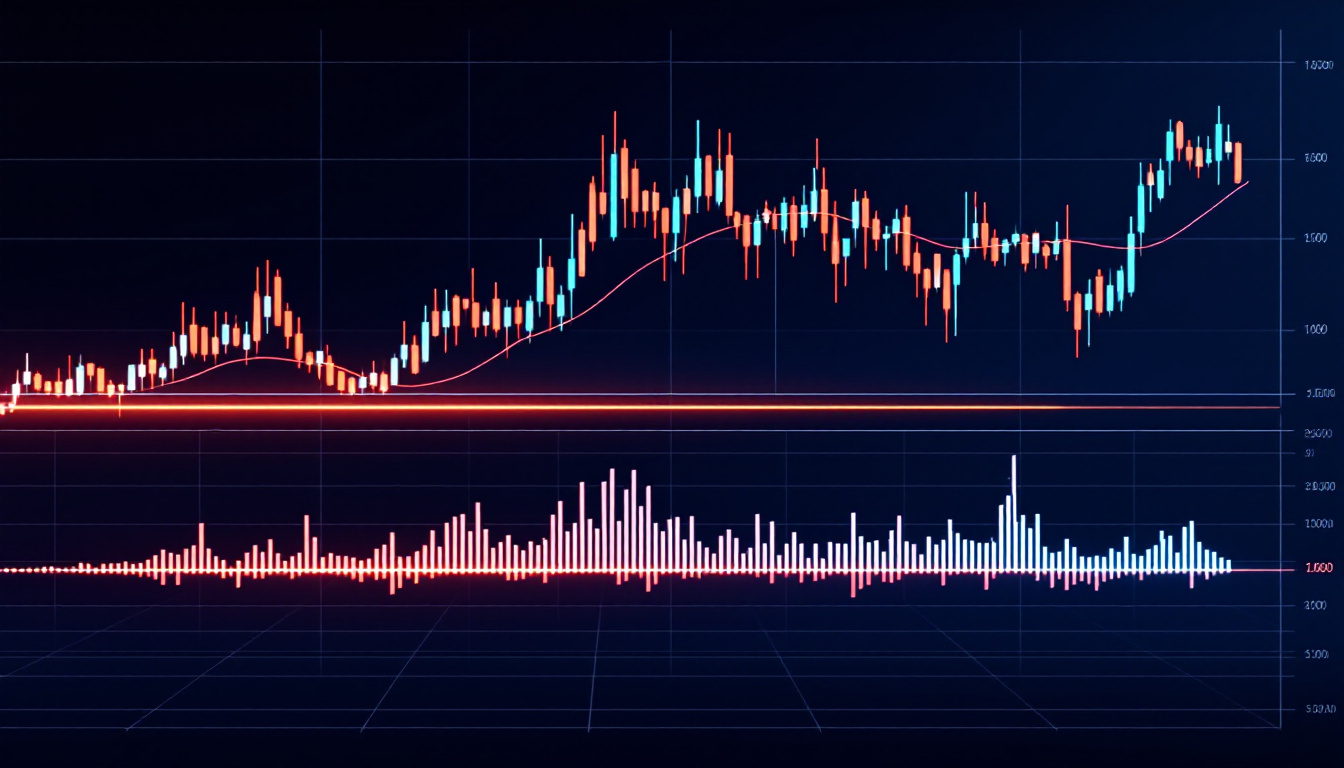
Every indicator on your chart is a mathematical transform of data you already have — price, and sometimes volume. RSI, MACD, moving averages, all of them: they take the price series, run a formula over it, and draw the result in a way that's easier to read. That's genuinely useful. But it has a hard consequence: an indicator contains no information that isn't already in price. It can't see the future, because all it has ever seen is the past, repackaged.
Hold onto that. It dissolves most of the confusion, because it tells you what indicators are for: making a pattern in price more legible — never revealing something price hasn't already shown.
What RSI actually measures
The Relative Strength Index compares the size of recent gains to the size of recent losses over a lookback (default 14 periods) and scales it from 0 to 100. High readings mean recent candles have been dominated by gains; low readings, by losses. Convention marks above 70 as "overbought" and below 30 as "oversold."
Those labels are where people go wrong. "Overbought" does not mean "due to fall." It means price has been rising strongly — which, in an uptrend, is exactly what you'd expect and want. In a strong trend RSI can pin above 70 for days while price keeps climbing. Selling because "RSI is overbought" is, much of the time, selling because the trend is strong. That's backwards.
RSI's overbought/oversold signals are range tools. At the edge of a range, an extreme RSI reading lines up with a level and can mark a turn. Inside a trend, the same reading is a sign of strength, not a sell signal. The indicator didn't lie — it was read in the wrong regime.
What MACD actually measures
MACD (Moving Average Convergence Divergence) is built from moving averages: it plots the difference between a fast and a slow EMA (typically 12 and 26), adds a signal line (a 9-period EMA of that difference), and a histogram showing the gap between the two. It's a momentum-and-trend instrument — it tells you whether momentum is building or fading and in which direction.
Its famous trigger is the "MACD cross," when the MACD line crosses its signal line. The problem is structural: it's a moving average of a difference of moving averages. By the time the cross prints, a good chunk of the move has already happened. The histogram turns earlier (it measures the rate of change) but pays for that with more false flips. There's no free lunch — earlier means noisier.
The sentence that fixes everything
Build your trade idea from structure — trend, levels, the setup. Then use an indicator to ask, "does momentum agree with this idea?" If yes, that's confluence. If no, that's a reason to stand aside. What you never do is let the indicator generate the trade. The structure leads; the indicator seconds the motion.
This is exactly how momentum sits in our confluence gate — factor four asks whether an oscillator or MACD reading is in the trade's favour, as confirmation of a thesis the trend and level already built. It is never the reason on its own.
Regime decides which tool
Most "the indicator failed me" stories are really "I used a range tool in a trend" (or the reverse):
- Ranging market → oscillators like RSI shine. Overbought at the range top, oversold at the bottom, fading the extremes back to the middle.
- Trending market → trend tools like MACD and moving averages shine. Oscillators give endless premature "reversal" signals that the trend steamrolls.
Reading the regime first (lesson 2-3) isn't optional housekeeping — it's what determines whether your indicator is the right instrument or a misleading one. The indicator is only as smart as the question you ask it.
Divergence: the one forward-leaning use
There is one place an oscillator hints at something before price confirms it: divergence — when price makes a new high but the oscillator makes a lower high, suggesting momentum is fading under the surface. Even then it's a warning, not a trigger. It's worth its own treatment, which is the next stop.
This is Lesson 4-2 in long form
Bollinger Bands, MACD, and RSI — interactive, with a quiz gate at 70% — is free in the course. Series 1 is free to read; a free account unlocks all 44 lessons and saves your progress.