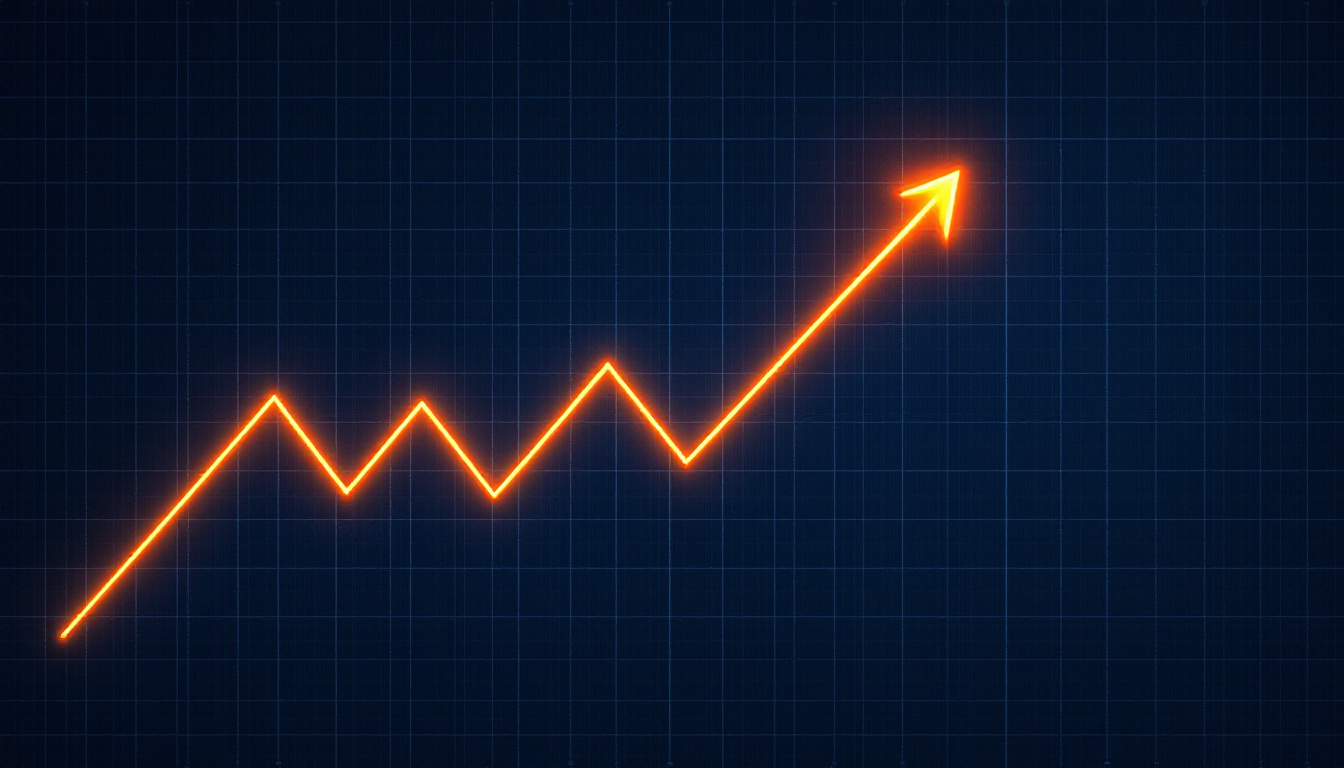
A trend is a structure, not a feeling
Most traders "see" a trend the way they see a face in a cloud — the chart slopes up, so it's an uptrend. That's not a definition you can trade or be wrong about. The structural definition is exact:
- An uptrend is a sequence of higher highs and higher lows (HH/HL).
- A downtrend is a sequence of lower highs and lower lows (LH/LL).
- Anything else — roughly equal highs and lows — is a range, not a trend.
This matters because it gives you a falsifiable read. You're not asking "does this feel bullish?" You're asking "are the swing points still making higher highs and higher lows?" — a yes/no question anyone looking at the same chart should answer the same way.
An uptrend is intact until a higher low is broken. A decisive close below the most recent higher low is a "break of structure" — the first objective evidence the uptrend may be over. Until that happens, dips are dips, not reversals. This is the line between patience and hope.
Drawing a trendline that's actually valid
A trendline connects the swing lows in an uptrend (or swing highs in a downtrend), acting as dynamic support that rises with price. The discipline is in how many touches it takes to trust it:
- Two touches — a hypothesis
- Any two points can be connected by a line. Two touches let you draw a trendline, but it's a proposal, not a proven level.
- The third touch — validation
- When price respects the line a third time, it's confirmed: the market is demonstrably reacting to it. Now it's tradeable.
Two other rules keep trendlines honest. Steepness is fragility — a near-vertical line reflects an unsustainable pace and breaks quickly; the durable trends are the moderate ones. And connect the bodies or the wicks consistently; don't cherry-pick whichever touch makes the line look better after the fact.
Channels: the trend's two rails
A channel adds a parallel line on the opposite side of price — connecting the highs in an uptrend to mirror the rising support line. Price then oscillates between the two rails. The practical use is straightforward: in a healthy uptrend, the lower rail is where with-trend entries set up, and the upper rail is where you manage or take profit. Trading the channel with the trend (long off the lower rail) stacks the odds; fading it (shorting the upper rail against an uptrend) is counter-trend and a different, harder game.
When a "trend" is really a range
The most common trendline mistake is drawing one across a range. If the highs and lows are roughly level — no clear HH/HL or LH/LL — there is no trend, and any line you draw is decoration. Ranges call for a different toolkit: trade the edges (support and resistance), not a slope. Identifying which regime you're in before choosing your tools is the whole subject of lesson 2-3, and it's the most underrated skill in technical analysis.
If you have to ignore two wicks and tilt your head to make a trendline "work," it doesn't work. Forcing structure onto a chart that doesn't have it is how traders convince themselves a chop-fest is a trend — and then get chopped.
Why the trend is factor one
In our confluence gate, the higher-timeframe trend is the one mandatory factor — no setup passes without it. The reason traces straight back to this lesson: a trade aligned with HH/HL structure on a larger timeframe has the dominant flow of the market behind it, while a counter-trend trade is betting that flow is wrong. Read the structure first; everything else is secondary confirmation of a thesis the trend already set.
This is Lesson 2-2 in long form
Trend structure, trendlines, and channels — interactive, with a quiz gate at 70% — is free in the course. Series 1 is free to read; a free account unlocks all 44 lessons and saves your progress.